Understand the system
Break the process into subsystems, interfaces, operating states, and requirements that can be reviewed.
Rocavo / Engineering services
Engineering for machines, workstations, and automation subsystems—connecting mechanical design, electrical systems, controls, and software around your requirements.
The Rocavo AI Engine ↗In development to connect requirements, design, and verification.
01 / The work
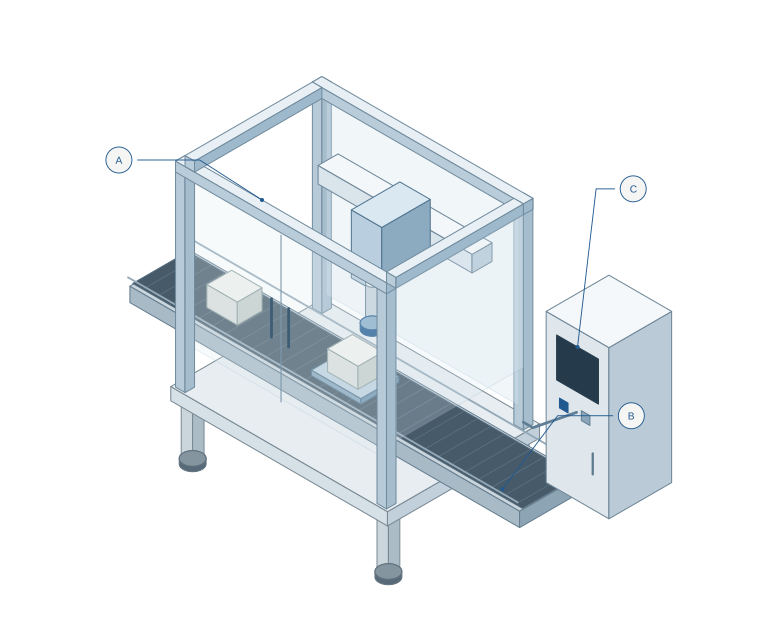
A machine must do more than complete one motion. Part handling, sequence, sensing, operator access, utilities, and maintenance all affect whether the equipment can perform the intended process. Those decisions need to be developed together.
Start from the operation, parts or materials, target output, and constraints. Define a machine concept before committing to detailed engineering.
Scope handling, motion, tooling, inspection, or another defined portion of the machine, with clear interfaces to the rest of the equipment.
Bring mechanical, electrical, controls, and software work into an agreed system architecture, operating sequence, and engineering package.
02 / The Rocavo AI Engine
A machine is a network of engineering decisions. Rocavo’s AI Engine is being developed to connect requirements, orchestrate design work across disciplines, and carry changes through the affected parts of a system.
Break the process into subsystems, interfaces, operating states, and requirements that can be reviewed.
A payload or throughput change can affect structure, actuation, power, sensing, control logic, and the acceptance plan.
Coordinate models, drawings, electrical information, controls scope, component selections, and build documentation.
Our internal engineering platform is in active development. Every customer engagement has an agreed scope, review stages, deliverables, and acceptance criteria.
Explore the Engine’s approach ↗03 / Your engineering package
The proposal identifies exactly what you receive. The following elements can be combined into a focused assignment or a broader system engagement.
The intended process, production targets, layout, sequence, interfaces, and constraints used to evaluate the proposed machine concept.
Models, drawings, and component selections for the agreed mechanisms, tooling, frames, guarding, and access requirements.
The agreed schematics, control architecture, I/O definition, and PLC, HMI, or software scope needed to coordinate the machine’s operation.
A bill of materials, build documentation, and acceptance criteria that connect the engineering package to procurement, assembly, and testing.
Design package or complete system: we agree the responsibility for procurement, fabrication, assembly, integration, and physical testing before work begins. File formats, review stages, price, and schedule are part of that scope.
04 / How an engagement starts
Bring what you have. We can identify the missing decisions together before detailed work begins.
Share the process, product or material, target output or cycle time, available space and utilities, and any equipment the machine must connect to.
Define deliverables, responsibilities, review points, acceptance criteria, timing, and price. A first phase can resolve feasibility or requirements.
Review the design at agreed stages, resolve feedback, and prepare the contracted engineering package or system handoff.
Before you begin
Yes. Describe the operation, the parts or materials involved, the required output, and the constraints you already know. Photos, drawings, or a process video can help. The first scope can establish requirements and compare concepts before detailed engineering begins.
Yes. A project can be limited to an agreed subsystem or engineering package. We define its boundaries, interfaces, deliverables, and the responsibilities retained by your team or other suppliers.
We agree them as part of the engagement. The scope identifies who procures, fabricates, assembles, and integrates the equipment, which operating and safety requirements apply, and what evidence or testing is required for acceptance.
Start with your requirements
Share the process, product or material, target output or cycle time, available space and utilities, and any equipment the machine must connect to.
Send your requirements