Connect devices, guide operators, run tests, and turn measurements into useful results. Software engineering for instruments, machines, hardware products, and the workflows around them.
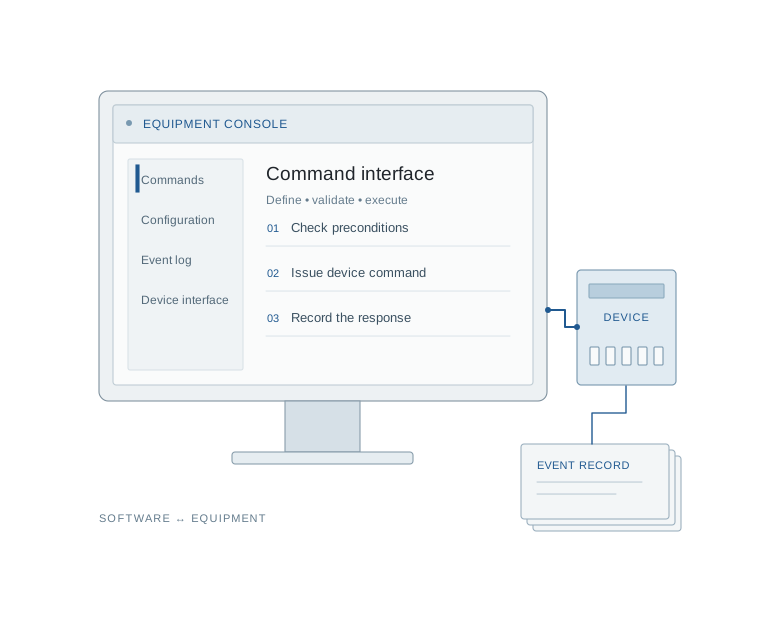
From device interaction to useful information.Illustrative concept
01 / Engineering capabilities
Specific work. A connected perspective.
An engagement can improve an existing application, connect a device to your workflow, or develop the software for a new system. Desktop applications, browser interfaces, APIs, and cloud connectivity are scoped around your equipment, environment, and users.
01
Instrument control & acquisition
Coordinate instruments and sensors, manage acquisition sequences, and retain the context needed to interpret measurements. Define timing, data formats, and behavior when a device or reading is unavailable.
Turn an agreed test procedure into a repeatable workflow. Define parameters, sequence the equipment, check results against acceptance criteria, and make each run traceable.
Typical scope outputsTest sequences · Result checks · Logs and reports
03
Desktop & browser applications
Give operators and engineers a clear way to configure equipment, start work, view status, and investigate results. Fit the application to its actual users and deployment environment.
Connect equipment, applications, and data services through defined interfaces. Local or cloud connections can support job instructions, run results, monitoring, and integration with existing tools.
Typical scope outputsAPIs and adapters · Message and data definitions · Access and error behavior
05
Scientific computing & analysis
Develop reproducible calculations and analysis workflows for engineering measurements. Specify assumptions, process data, calculate agreed metrics, and present results that can be checked.
Typical scope outputsAnalysis code · Reference-case checks · Plots and result exports
06
Simulation & engineering tools
Develop models, simulated device interfaces, and utilities to explore system behavior or automate engineering work. State the model’s assumptions and distinguish simulated results from physical verification.
Typical scope outputsModels and scenarios · Development utilities · Documented limits
07
Signal & image processing
Develop processing workflows for sampled signals or images, from filtering and calibration to feature extraction and result interpretation. Define representative input data and acceptance checks before choosing the method.
These example requests show how a project can begin. They describe possible scopes, not completed customer projects.
01 / EXAMPLE BRIEF
Automate a bench procedure
Replace manual instrument settings and spreadsheet entry with a defined test sequence, result checks, and an exportable report.
02 / EXAMPLE BRIEF
Create an operator application
Let technicians select a recipe, follow progress, review faults, and retrieve past runs through a desktop or browser interface.
03 / EXAMPLE BRIEF
Build an engineering analysis tool
Turn raw measurements or images into a repeatable analysis workflow, with documented assumptions, reference-case checks and results your team can explore and export.
03 / The Rocavo AI Engine
Software developed with the whole system in view.
The Rocavo AI Engine is our internal engineering platform, currently in development. We’re building it to connect requirements, implementation, and verification across software, mechanical, electrical, and controls engineering. Customers engage Rocavo for defined engineering work or system delivery.
01 / CONNECTED ENGINEERING
Requirements to architecture
Connect user workflows, device constraints, and performance requirements to the structure of the software.
Trace the effects of a changed requirement into the implementation and the checks needed to review it.
The Engine is Rocavo’s internal platform, in active development. Your engagement has an agreed scope, engineering review points, deliverables and acceptance criteria.
We define the deliverables around the work you need. A focused assignment may use only part of this package; a larger engagement can connect it to the other disciplines.
Architecture & interfaces
Agreed workflows, component boundaries, data formats, and system interfaces.
Source & application builds
Source, dependencies, configuration, and builds for the agreed deployment environment.
Verification & results
Test cases, reference inputs, and recorded results for the agreed software and integration checks.
Handoff & operation
Installation, configuration, operating instructions, known limitations, and maintenance notes.
We agree file formats, source access, review stages, schedule and acceptance before work starts. Procurement, physical builds, commissioning, specialist reviews and ongoing support are identified separately where needed.
Before you begin
Useful questions.
Can you work on our existing application or hardware?
Yes. Share the application’s purpose, source access where available, interfaces, and the issue or feature you need addressed. The first scope can be a review, a defined improvement, or a larger integration effort.
Will we receive the source code?
Source delivery, build instructions, dependencies, and usage rights are defined in the engagement. We agree the package your team needs to maintain or extend the work after handoff.
How will the software be verified?
We agree test cases and acceptance criteria. Checks can use reference datasets, simulated interfaces, and actual devices. The plan identifies which results require physical hardware and who provides it.
A focused task or a larger system
Where does your project need help?
Tell us what the software needs to do, which devices or applications it must connect to, and what already exists. Include the target environment and an example input, workflow, or expected result.