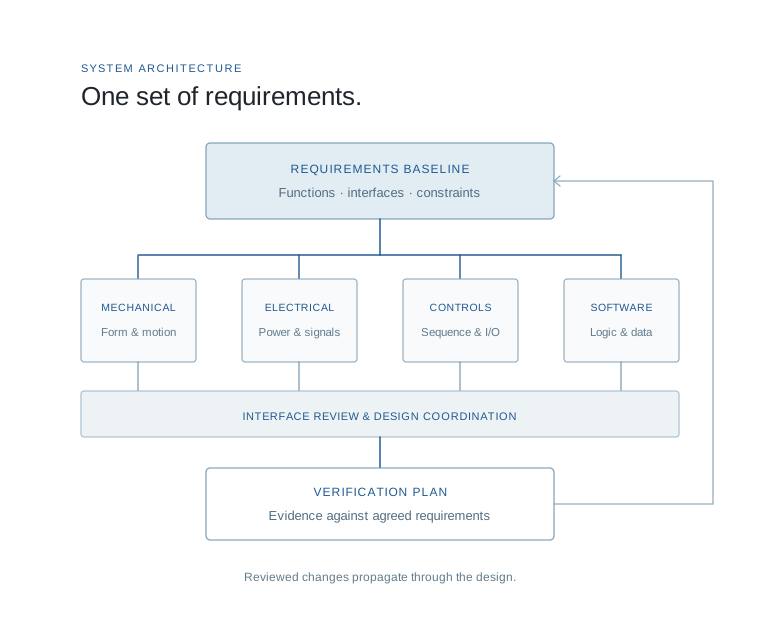
Turn an operating need into a defined system: requirements, architecture, interfaces and a plan to verify the result. Coordinate the disciplines before their assumptions diverge.
Requirements to disciplines to verification.Illustrative concept
01 / Engineering capabilities
Specific work. A connected perspective.
A product or machine can have well-designed parts and still fail at the interfaces. Systems engineering defines what the whole system must do, assigns responsibilities to its subsystems and makes dependencies visible throughout development.
01
Requirements development
Translate the intended use, operating environment and stakeholder needs into requirements that can guide design decisions. Separate established inputs from assumptions and identify how each requirement will be evaluated.
Typical scope outputsRequirements baseline, open-question register and acceptance-method definitions.
02
System architecture & trade studies
Compare possible arrangements before committing to detailed work. Break the system into subsystems, allocate functions and evaluate tradeoffs in complexity, cost, performance, construction and maintenance.
Typical scope outputsArchitecture diagrams, subsystem definitions and documented concept decisions.
03
Interface definition & coordination
Define the mechanical, electrical, data and operational boundaries between components or teams. Track mounting geometry, power, signals, timing, communication and responsibility at each interface.
Typical scope outputsInterface records, connection definitions and integration responsibilities.
04
Integration & construction planning
Develop an assembly and integration sequence that accounts for procurement, access, tooling, dependencies and subsystem readiness. Resolve how the design will actually be built and connected.
Typical scope outputsIntegration plan, build sequence, dependency list and readiness checks.
05
Verification planning & design reviews
Connect requirements to analysis, inspection, demonstration or test. Define the evidence needed, review unresolved risks and distinguish design verification from physical acceptance work.
Typical scope outputsVerification matrix, review records, test specifications and an evidence register.
06
Configuration & engineering changes
Control the baseline of models, drawings, code and parts information. Assess how a changed requirement affects interfaces, procurement, tests and documentation before releasing the update.
Typical scope outputsRevision baseline, change-impact record and coordinated release checklist.
02 / Ways to put it to work
Bring a real engineering problem.
These example requests show how a project can begin. They describe possible scopes, not completed customer projects.
01 / EXAMPLE BRIEF
Turn an idea into an executable scope
Define what a new instrument or machine must do, compare architectures and identify the engineering work needed for a first build.
02 / EXAMPLE BRIEF
Coordinate several engineering teams
Establish subsystem boundaries and interface records so internal engineers and outside suppliers work from compatible requirements.
03 / EXAMPLE BRIEF
Review a design before committing to build
Identify unresolved interfaces, construction dependencies and verification gaps before releasing drawings or ordering long-lead parts.
03 / The Rocavo AI Engine
The architecture behind connected engineering.
The Rocavo AI Engine is being developed around this systems view: a hierarchy of requirements, coordinated work across disciplines and changes that follow their dependencies. The goal is a consistent engineering package that can move from design into construction.
01 / CONNECTED ENGINEERING
Break down the system
Connect the top-level need to subsystem functions, interfaces and the engineering tasks required to resolve them.
02 / CONNECTED ENGINEERING
Coordinate dependent decisions
A change in capacity or operating conditions should prompt review of hardware, power, controls, software and construction constraints.
03 / CONNECTED ENGINEERING
Carry evidence forward
Link design decisions to their assumptions, reviews and planned verification so the final package can be assessed against its intent.
The Engine is Rocavo’s internal platform, in active development. Your engagement has an agreed scope, engineering review points, deliverables and acceptance criteria.
We define the deliverables around the work you need. A focused assignment may use only part of this package; a larger engagement can connect it to the other disciplines.
Requirements & architecture
An agreed design basis, system breakdown, operating scenarios and documented trade decisions.
Interface package
Mechanical, electrical, communication and operational definitions that connect the responsible teams.
Build & verification plan
Integration sequence, verification methods, acceptance criteria and assigned responsibilities.
Review & change record
Design-review findings, open decisions, change impacts and a traceable engineering baseline.
We agree file formats, source access, review stages, schedule and acceptance before work starts. Procurement, physical builds, commissioning, specialist reviews and ongoing support are identified separately where needed.
Before you begin
Useful questions.
Can requirements development be a standalone engagement?
Yes. An initial scope can focus on requirements, feasibility and architecture, with a defined handoff for your team or a later detailed-design phase.
Can Rocavo coordinate with our engineers and suppliers?
The engagement can assign a defined subsystem or coordination role alongside your team. We agree ownership of interfaces, design approvals, changes and acceptance evidence before work begins.
Does a verification plan mean the system has been validated?
No. A plan defines what evidence is needed and who will produce it. Completed analysis, inspections and physical tests are separate activities, recorded against the agreed requirements and acceptance criteria.
A focused task or a larger system
Where does your project need help?
Share the intended outcome, operating environment, known constraints, existing architecture and teams or suppliers involved. Include the decisions that are currently blocking progress.